Wild cats are a true treasure of nature. Among them are rare and little-studied species, whose lifestyle and character are virtually unknown. However, scientists have managed to uncover some interesting facts about the habits of these felines.
Jaguarundi
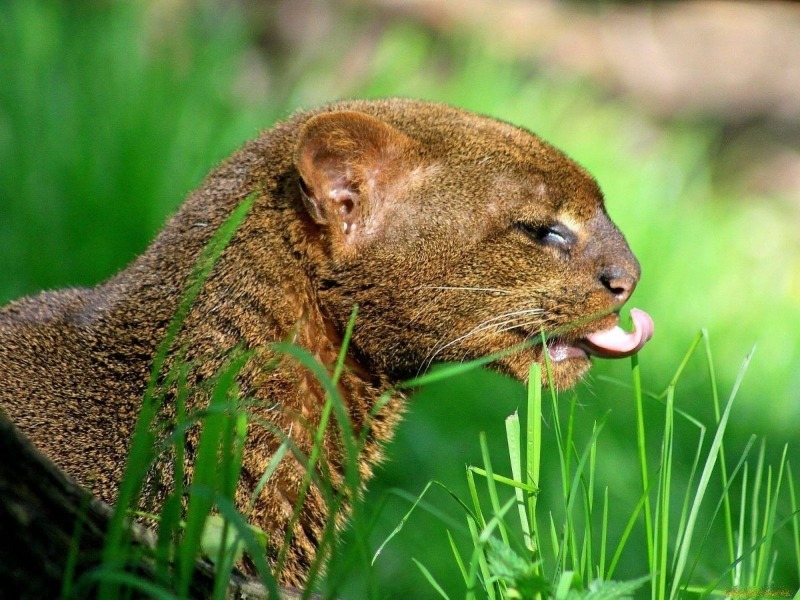
This small wild cat is native to Central and South America, preferring to inhabit dry or tropical forests, grasslands, lakeshores, marshes, and savannas. Its body length does not exceed 80 cm, its shoulder height reaches only 35 cm, and its weight can reach up to 10 kg. Jaguarundis are similar in appearance to mustelids or viverrids.
Although it's quite difficult to encounter this secretive member of the feline family in the wild, scientists have managed to discover several interesting facts about it:
- leads a diurnal lifestyle, the peak of hunting occurs during the hot midday;
- moves mainly on land, but can swim or climb trees;
- feeds on small mammals, birds, fish, small reptiles and frogs;
- leads a solitary lifestyle, finding a partner only during the breeding season.
What's also interesting is that the jaguarundi exhibits a unique behavior when hunting, one not seen in other felines. The animal rises on its hind legs and remains frozen in that position for extended periods, stalking its prey and waiting for the opportune moment to strike.
Codecode
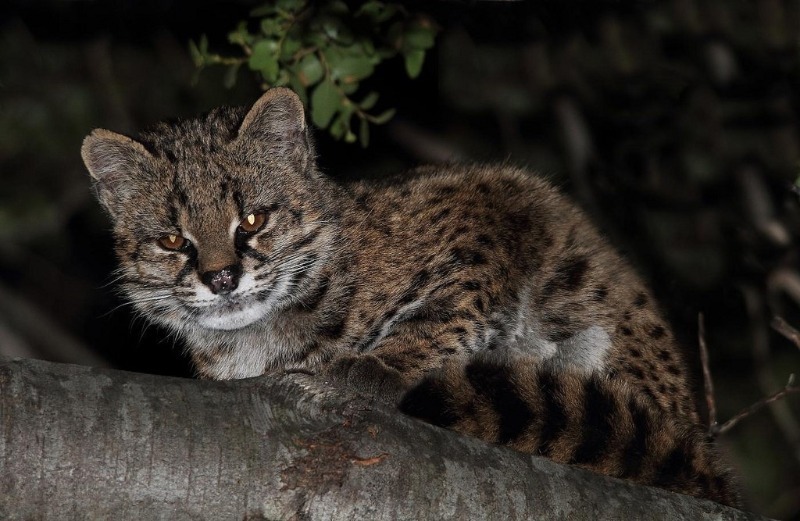
The Chilean cat (kodkod, guinya) is a little-studied inhabitant of the Valdivian forests. It inhabits western Argentina and southern and central Chile. Locals have many terrifying legends associated with this predator. According to one, the kodkod is a vampire, feeding on the blood of living creatures. This conclusion about the small aggressor was not accidental. Upon examination of the victims, two small wounds resembling bat bites were visible on their necks. Scientists, however, have come up with their own explanation for this fact. They believe that this is the kodkod's unusual method of dispatching prey larger than itself.
In terms of appearance, the Chilean cat is the smallest of the South American cats, resembling a teenage kitten. Its height at the withers does not exceed 22 cm, its body length including head and tail is half a meter, and its weight is 2-3 kg.
This predator leads a solitary lifestyle, finding a mate only during the mating season. It hunts both day and night for mammals, birds, lizards, frogs, and moths. Being an able swimmer, it often feasts on the fish it catches. It is a skilled tree climber, stealing birds' eggs from nests.
Deforestation, poaching, and food shortages due to human activity have significantly reduced the population of this rare cat. The Kodkod is listed as endangered, with a population estimated at no more than 10,000 adult individuals.
Andean cat
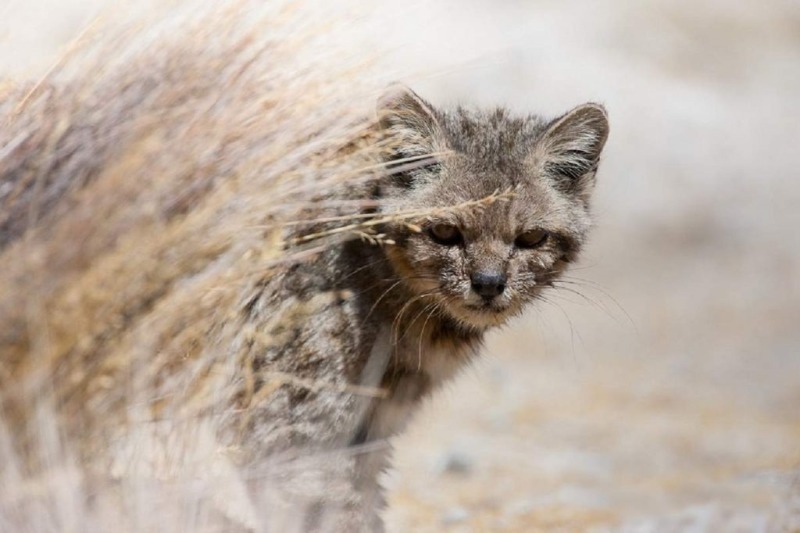
One of the rarest and poorly studied cats, it is on the verge of extinction. There are no more than 2,500 adult individuals left.
Resembling a common domestic cat in size, it inhabits the South American Andes. Almost nothing is known about its lifestyle, except that it hunts at night and immediately changes its location when discovered by humans.
It's no coincidence that the highlander developed a distrust of people. For many years, the Indians considered killing the animal an honor. If a cat approached a settlement, it was stoned to death, and if caught, it was kept in captivity, where the animal couldn't survive for more than a month, refusing food and water.
Temminck's cat
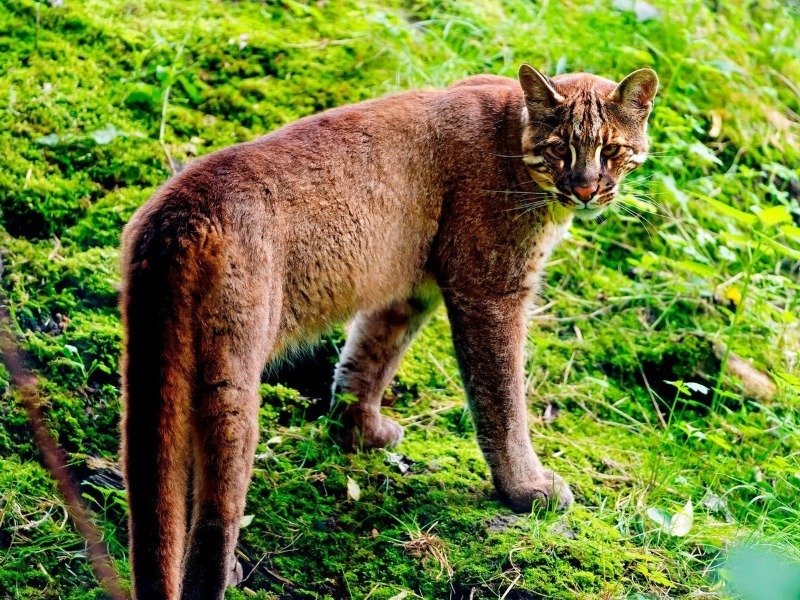
The Asian golden cat has a secretive nature, making it very difficult to spot in the wild. Resembling a puma in appearance, its body length ranges from 65 to 105 cm, its height at the withers ranges from 39 to 50 cm, and its weight ranges from 12 to 15 kg.
Not much is known about this animal's lifestyle. They hunt at any time of day, their lifestyle depending on the daily routine of their potential prey. While stalking prey, they can cover long distances (4-5 km), but prefer to retreat when encountering a human. They often attack from high trees, but lack the strength for a long pursuit. They hunt primarily small rodents, birds, amphibians, and small reptiles, and less frequently monkeys and livestock. They lead a solitary life.
Pampas cat
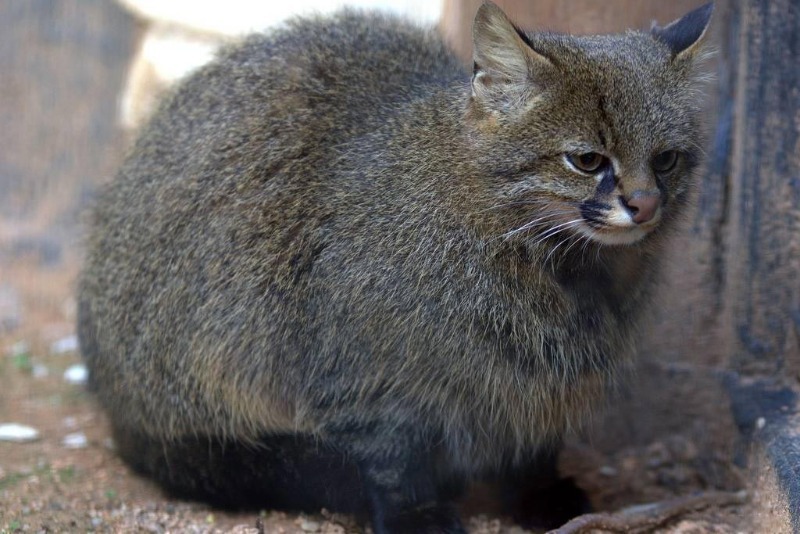
This small animal, up to 80 cm long, with shaggy fur and weighing up to 7 kg, inhabits the steppe, forest, and mountainous regions of South America. Locals call it the straw cat and have mixed feelings about it, attributing mystical powers to it or killing it for its beautiful gray-brown or yellowish-sand fur.
Little is known about the grass cat's lifestyle. It hunts most often at dusk or at night, attacking smaller prey and trying to avoid larger predators. Upon seeing a human, it begins to hiss and fluff up its fur, and if it senses danger, it attacks without hesitation, regardless of size. It feeds on small mammals, lizards, and insects, but in times of famine, it may attack domestic animals.
Sumatran cat
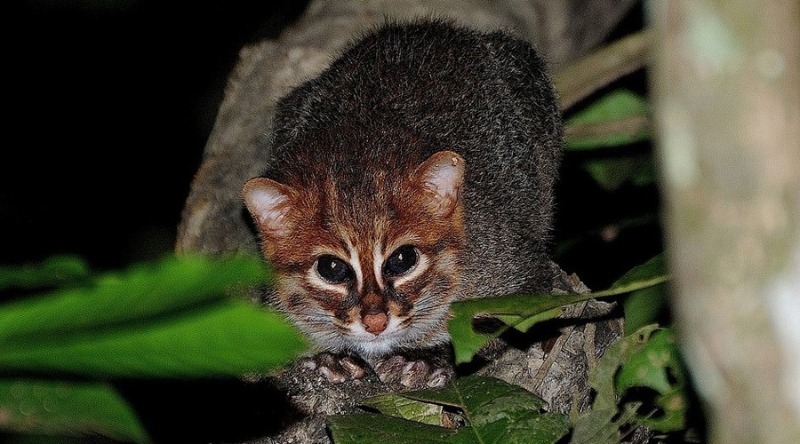
Named after the island of Sumatra, this Southeast Asian species is not very large: its body length does not exceed half a meter, its height at the withers is 30 cm, and its weight is 3 kg.
It is distinguished by its contradictory character, great secrecy, close-set large eyes that provide maximum vision, and the presence of webbing between the toes.
It is nocturnal, preferring to hunt along riverbanks. In the event of serious danger, it prefers to flee the battlefield rather than attack.
It most often feeds on fish and frogs, less commonly rodents or chicks. To catch prey, it dips its head underwater and waits. Then it drags the prey to a safe distance and eats it. Interestingly, it sometimes consumes its food in the water, like a raccoon.
Caracal
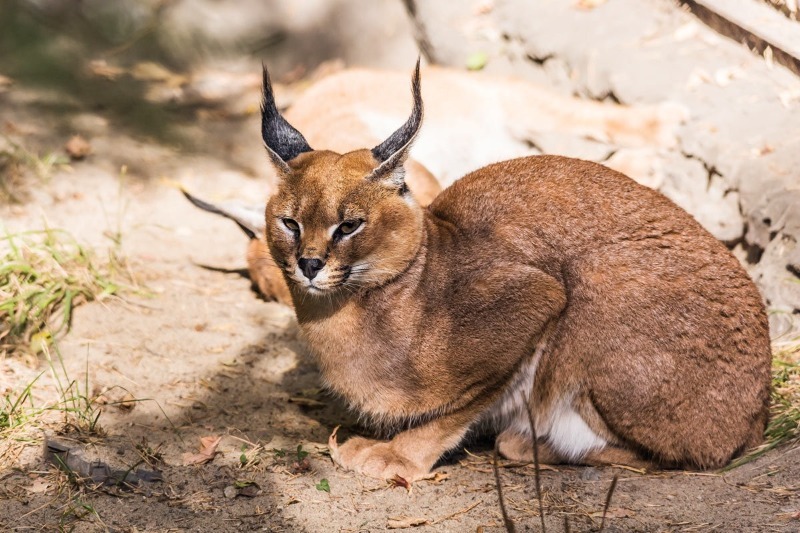
The caracal is a unique member of the cat family, resembling a lynx due to its large, black ears with tufted tips. Hence its name, which sounds like "kara-kulak" in Turkish, meaning "black ear."
It inhabits Central Asia and Africa, as well as the Arabian Peninsula. It lives in steppes and savannas, where its bright sand-colored fur makes it easier to camouflage.
Although considered a dangerous predator, the caracal was first domesticated in ancient Babylon, and was used on hunts. The caracal is an excellent predator, reaching a body length of 120 cm and weighing 20 kg. It is capable of attacking larger prey, such as antelope or small livestock.
It's also interesting that this animal began to be actively domesticated in the 20th century. It is distinguished by its dog-like devotion to its owner and its loyal attitude toward people.
Most wild cats are on the brink of extinction due to human activity and uncontrolled deforestation. Poaching also poses a threat to the population. Many species are already listed in the Red Book and are protected as national treasures.