Cats are able to predict changes in weather conditions. You shouldn't expect them to accurately predict temperatures. However, these animals serve as indicators of approaching cold weather, heat, snowstorms, or rain.
The cat sleeps with its belly up
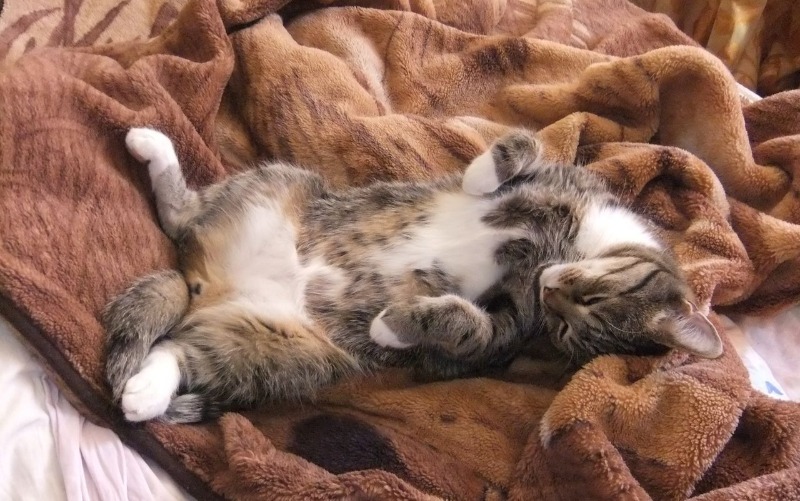
When the temperature rises slightly, the cat straightens up and assumes an arched posture. As the weather approaches a significant warming, the animal lies down in a semicircle. On hot days, it stretches out like a string. In this position, it may lie in the middle of the room.
This sensitivity to weather is due to the fact that cats sense and react to changes in atmospheric pressure much earlier than humans. Also, in hot weather, animals' thermoregulation increases, maintaining a constant body temperature. Cats' body extension helps increase the area where heat is lost.
The cat curls up into a ball and covers its nose with its paw
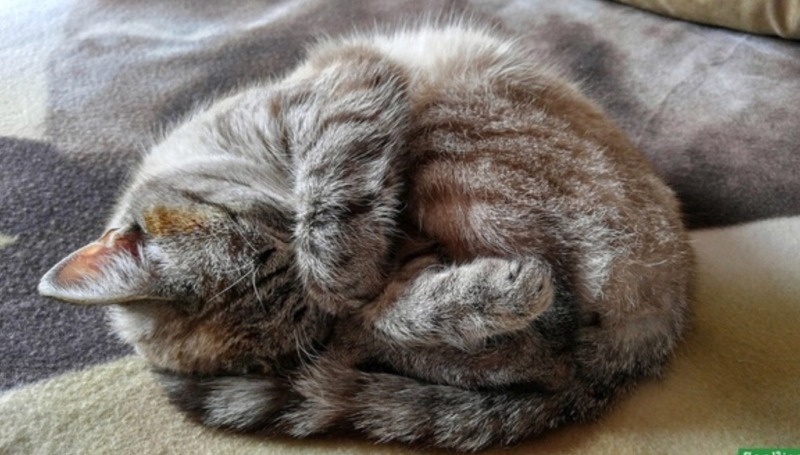
Cats also react to the approaching drop in temperature. They try to conserve body heat, so they begin to seek out a warm spot in the house, curl up, and cover their noses with their paws or tail.
The cat is spinning in its sleep, unable to find a place for itself.
Cat owners often notice that their cat takes a long time to settle down while sleeping and constantly changes position. This behavior indicates a change in the weather. If a cat starts scratching the carpet, wall, or floor, it's not just a coincidence. They're sensing the approach of a strong wind or snowstorm. If a cat's tail is fluffed up and raised, a snowstorm is imminent. It's believed that the rotation of a cat's head while grooming indicates the direction of the wind. If a blizzard or snowfall is approaching, the cat will become restless.
This is because cats' inner ears and eardrums are much more sensitive than humans'. Therefore, as inclement weather approaches, they begin to experience discomfort, which affects their behavior.
The cat drinks more than usual
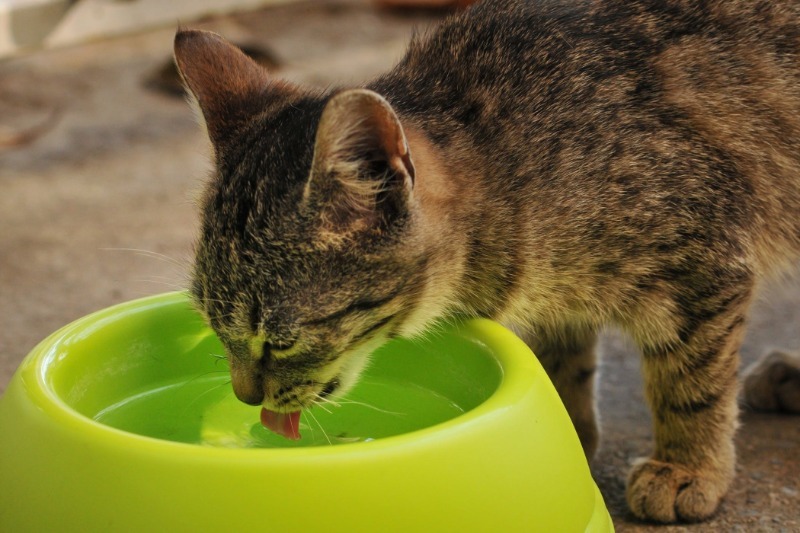
Before rain, a cat becomes less playful and stops chasing its tail. Its mood changes to one of pensiveness and calm. Before inclement weather, it will avoid walks outside. This is not surprising, as wet fur causes discomfort. At home, it will drink more water from a bowl and nibble on a special grass. As rain approaches, the cat will begin to thoroughly lick its tail and wash its ears. A cat's sneezing indicates that rain will begin within an hour.
Scientists explain tail licking and water drinking as an attempt to compensate for the tension in the intestines caused by fluctuations in atmospheric pressure.
Natural disasters: cats behave very excitedly
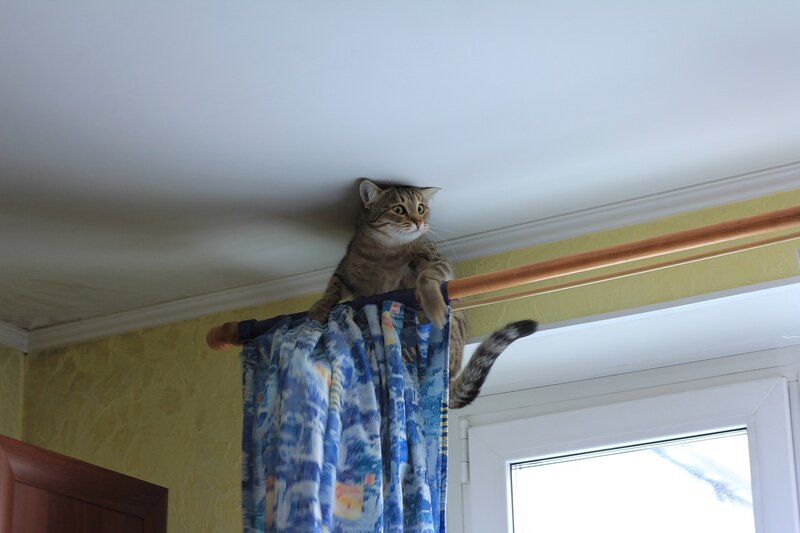
Animals are known to warn their owners of an approaching earthquake, volcanic eruption, or hurricane through their behavior. Cats are among the most frequently observed animals, almost always close to humans. Residents of areas with a high seismic risk have noticed that cats become highly agitated before an earthquake. Their fur stands on end, and their ears flatten against their heads. As a catastrophe approaches, cats begin meowing, alerting humans to the danger. They also seek a secluded spot and ask to go outside. The most sensitive animals leave the house a few days before an earthquake.
This behavior is explained by the fact that cats sense tremors that are undetectable by instruments. Another theory is that they react to changes in static electricity levels that precede an earthquake.
If strong winds, snowfall, or a storm are expected soon, the cat's behavior becomes restless - it begins to run around the house with its tail raised, often meowing loudly and cannot calm down for a long time.
The ability of cats and other animals to predict the weather has not been scientifically proven. Scientists merely speculate that animals react to the sounds of distant thunder, approaching rain, or changes in the air. Despite this, people actively exploit this ability.