Many have likely seen a photo of a universal cat trap that works reliably on both pets and larger cats, such as tigers at the zoo. What's so appealing about those rustling bags and cardboard boxes that have an almost magical effect on furry creatures?
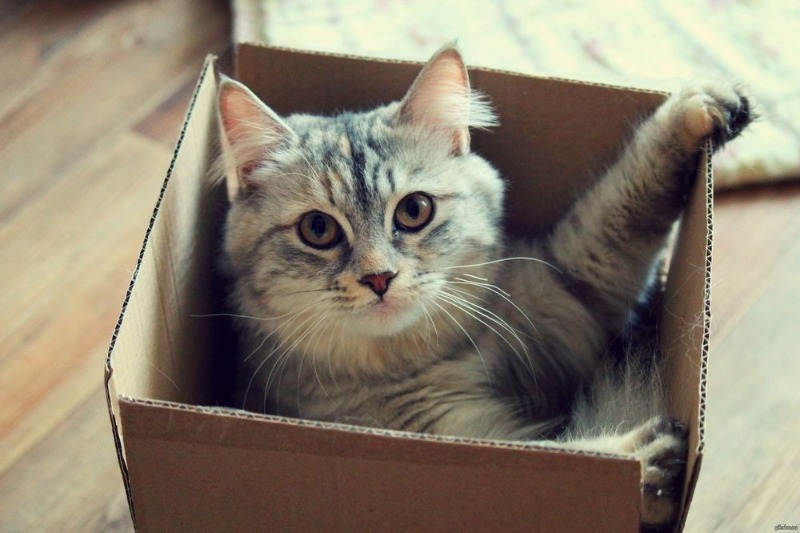
The cat uses the box as a shelter
Although cats have been domesticated for quite some time, they are predators by nature, and this call of the blood cannot be diluted by sour cream, delicious pieces in sauce, or any other benefits of civilization.
The lurking, stealthy mini-tiger that has taken up residence in your home tirelessly stalks prey while hiding from those who might track it and mistake it for prey. Yes, you can see it, and parts of its body may be sticking out from its hiding place, but this self-assured cat, confident to the tip of its tail, is convinced it's a ninja, a true master of hide-and-seek and camouflage.
In a cat's world, it hides not in a box or a bag, but in a tree hollow, a burrow, or a pile of dry leaves, where it awaits its prey, remaining unnoticed and safe. When a bow, a ball, or an entire person enters the attack zone, it cannot escape the deadly grip of sharp claws and teeth. The main thing is that the hunter doesn't fall asleep in the warmth and comfort of its hiding place while stalking.
Cats perceive the box as a safe space.
Besides the fact that no one sees the predator hiding in a safe shelter (even if it seems to you that this is not the case, remember: no one sees) and it can relax there without fear of attack from large animals, the box creates a feeling of security for other reasons as well.
Firstly, it's believed that many kittens remember the smell of cardboard as babies, as generations of cats have made their nests in boxes after the birth of their litter. The distinctive aroma is forever mingled with the scent of their mother, milk, bedding, and a feeling of safety and peace. If your kitten climbs into the box and starts pawing and purring, you know they're experiencing the same peace as being at their mother's side, because the baby walk (small steps, poking and scooping movements with their paws) is a completely instinctive movement used by kittens to let their mother know they're safe and sound.
A related theory is that the scent of paper resembles the scent of wood and evokes associations with more ancient cat hiding places—tree hollows. This is also why cats are drawn to cabinets, dressers, and other laminated wood flooring in your home.
Secondly, observations of cat behavior have shown that these animals dislike conflict, try to avoid it at all costs, and prefer to hide from a quarrel with their owner rather than listen to a lecture about how a scratched new sofa is an unnecessary precaution against strangers encroaching on your and the cat's (presumably) territory. Sooner or later, the storm will subside, and the kitty, having weathered it in a secluded spot, will reappear in full view, check to see if its human has stopped making noise, and enjoy life as everyone's favorite pet.
Studies have shown that the presence of boxes and other shelters allows cats to adapt to new environments more quickly and cope with stress more easily. Cats whose new shelters are equipped with paper caves become accustomed to them more quickly and are more willing to interact with people.
A cat relaxes in a small space
Cats' bodies are covered with vibrissae—tactile organs that include whiskers and furry "eyebrows." These "antennas" are also found on their paws. They collect and help the animal manage information about the surrounding world: temperature, humidity, the level of activity of objects; they vibrate to the quietest sounds and the slightest sway of the air, etc. These sensors, constantly operating at full power, have allowed felines to survive in the wild, providing their brains with information about potential danger even while sleeping. However, sometimes a cat wants to completely relax and turn off its tracking systems. This can only be done in a completely safe place that has already been explored, and its small size prevents unexpected danger from appearing while the cat is truly asleep.
Why do cats love bags so much?
The rustling bag is a toy in its own right, with a variety of uses. Firstly, it's where treats brought from the outside world are retrieved. A caring cat will always check to see if a person has forgotten to take anything out of the bag.
Secondly, even if you didn't forget (but the cat still took care and double-checked), nothing terrible happened: there are still smells left in the bag that definitely need to be examined and figured out what's what.
Thirdly, the bag moves with even the slightest breeze, so it's best to exercise caution and immediately clarify who's boss. A dangerous battle ensues, and the defeated enemy grumbles his way through the belly of the proudly reclining victor.
Fourthly, the very sound of rustling plastic or cardboard is similar to the pleasant rustling and pattering of little mouse feet, so you want it to go on and on, so you can “kill” the rustling music endlessly.
Finally, the cellophane, when charged, magnetizes the animal's fur, evoking unusual, pleasant sensations. The resulting package—a shelter with a built-in massage effect and pleasant auditory and olfactory accompaniment—is a true spa capsule.
As you can see, there's nothing unnatural or dangerous about cats' love of bags and boxes. The main thing is to ensure that your pet doesn't get caught in the handles or openings while playing, or swallow pieces of cellophane or cardboard. Otherwise, just relax and observe how unusually your pet creates their cozy little home.