Since ancient times, wealthy people on the African continent have tamed Serval kittens. Having a predator in the home was considered a sign of the owner's high status. In the 19th and 20th centuries, wild cats began to be imported to European countries and the United States, where the animals' unruly nature caused many problems for owners. To make the breed more manageable, it was crossed with a domestic cat in 1986. As a result, the Savannah retained its beautiful "leopard-like" coat and large erect ears, while losing its excessive aggressiveness. Today, this breed is one of the most expensive and prestigious in the world.
Description and breed standard
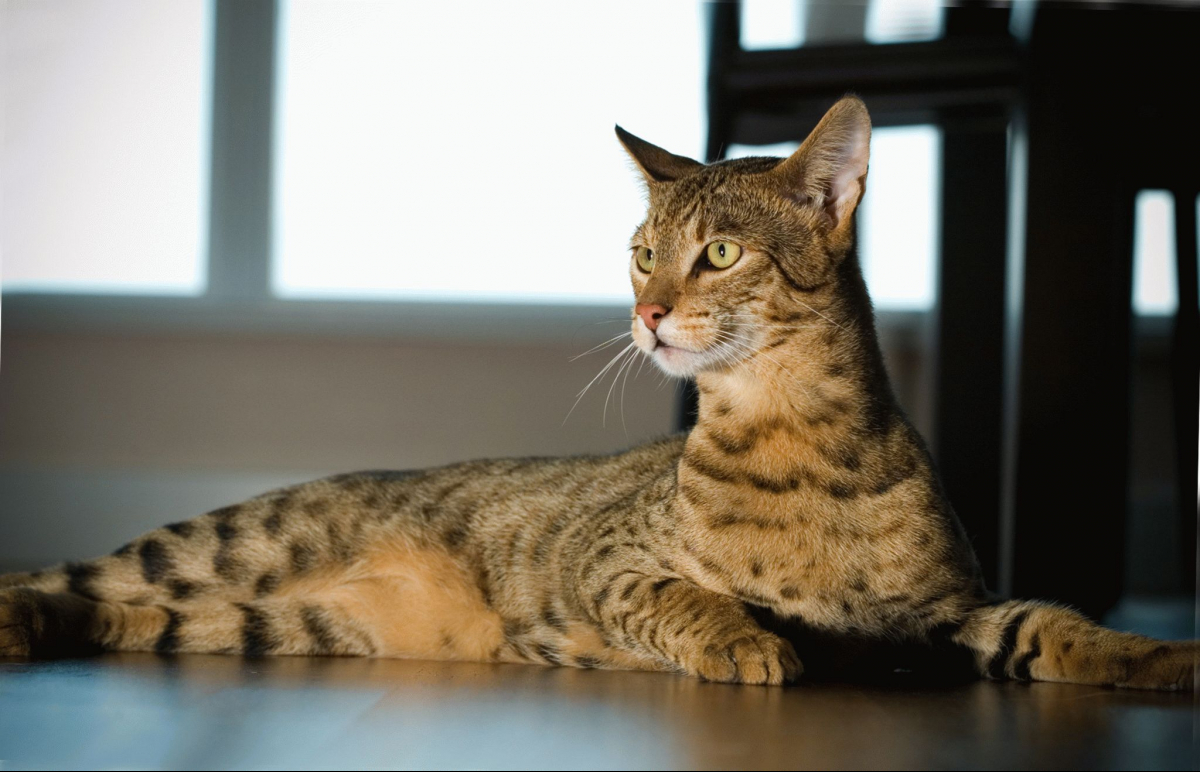
From its ancestors, the Savannah cat inherited a noble posture, a long body, an elongated neck, long and strong legs, a short and fluffy tail with a dark tip. The pet's appearance is particularly noticeable due to its large, unusually shaped eyes.
The animal has soft and very thick fur. Leopard spots on the body are randomly distributed and vary in size and color. The Savannah's base color can be chocolate, golden, brown, silver, or cinnamon tabby (cinnamon tabby with spots). The color and spotting patterns are significantly influenced by the domestic cat with which it is bred.
The higher the generation index of the breed, the more the offspring will resemble a wild serval.
A cat's size is largely determined by its class: the largest and heaviest cats will be found in the first and second generations (F1 and F2). They can reach 60 cm in height and weigh over 14 kg. Savannah cats are slightly lighter and smaller.
The average lifespan is 12-14 years. However, there are known cases of pets living 20 years or more.
Savannah cat breed standard
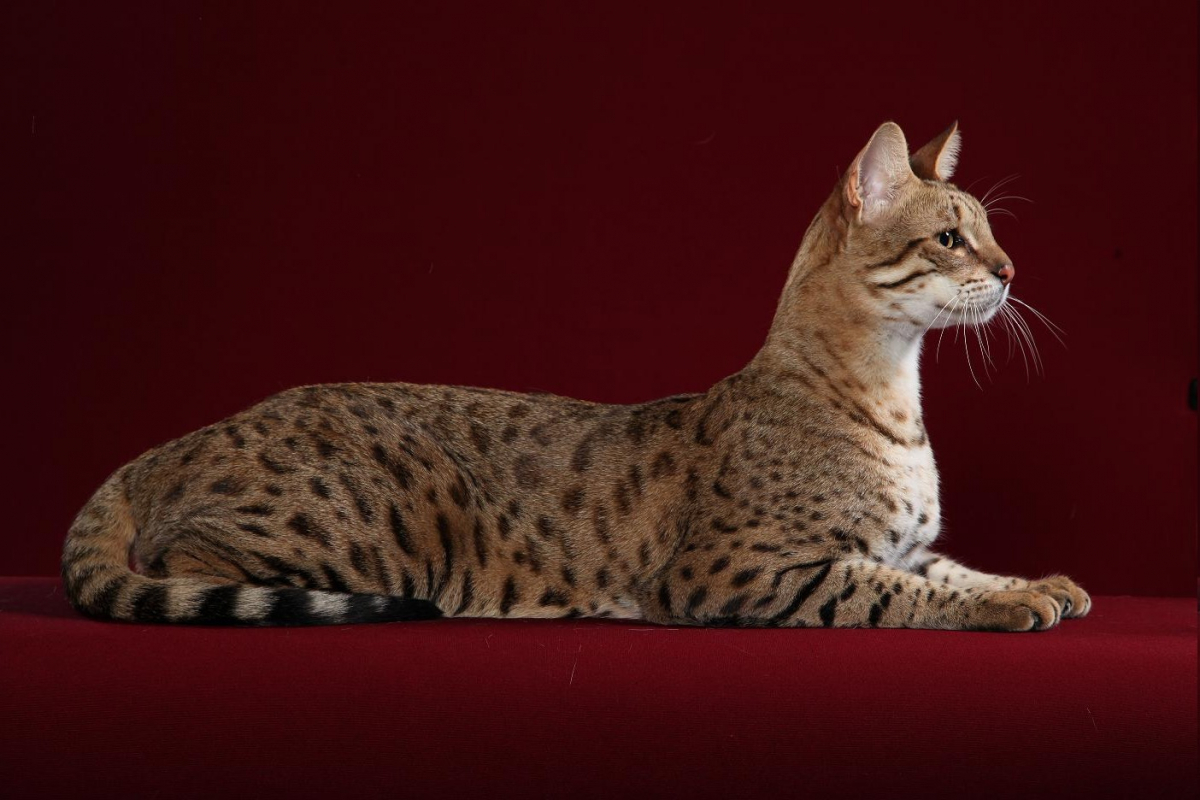
When purchasing a cat or kitten, you should pay attention to the established breed standard.
The main criteria are:
- slender, large and elongated body;
- large ears: wide at the base and pointed at the tips;
- large almond-shaped eyes;
- thick, soft and short fur of leopard color;
- spots are brown or black.
The most similar to the wild serval are first-class Savana cats, or more precisely, kittens from the first cross with a domestic cat. The price of such individuals can reach $10,000 or more.
Character
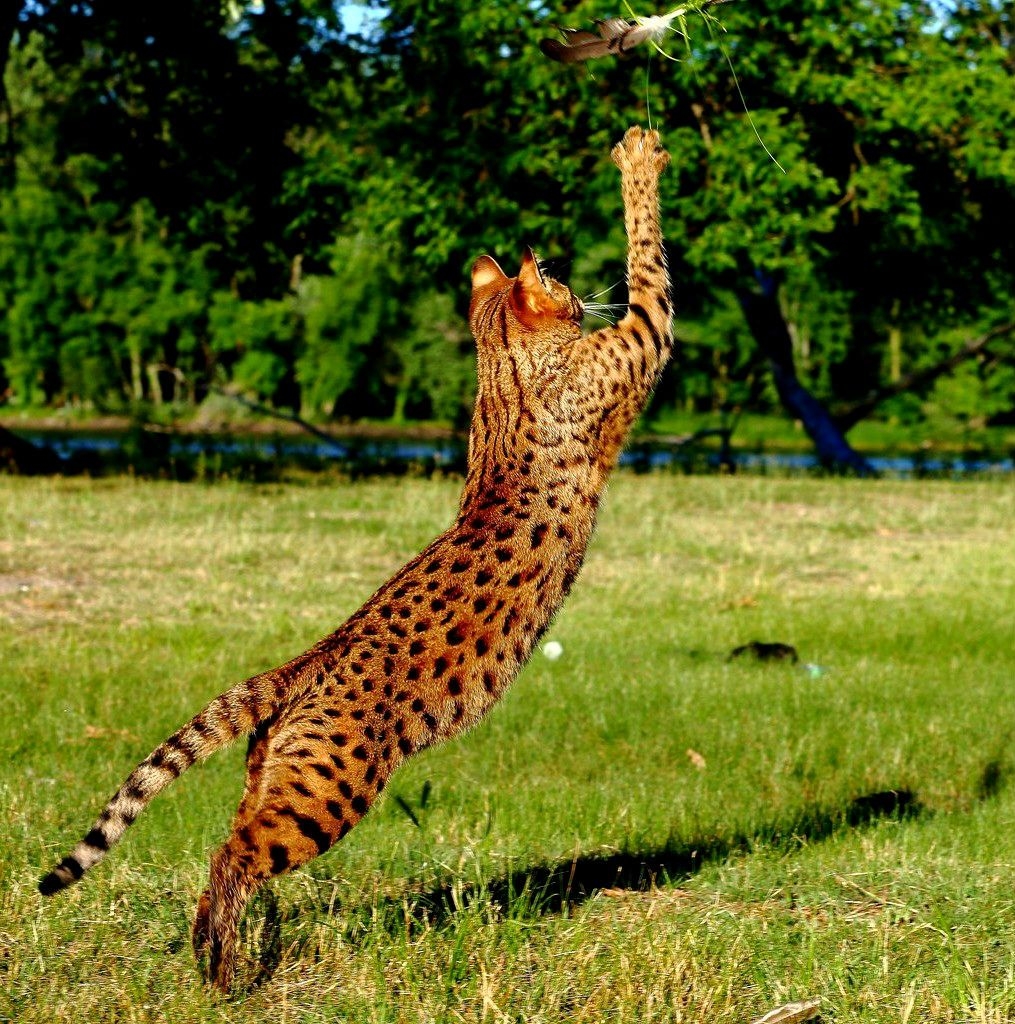
The Savannah cat has a playful and inquisitive nature. When adopting a Savannah cat, be aware that it will require a lot of attention. If you don't play with your cat, it will start scratching and tearing furniture or throwing objects from tables and cabinets onto the floor.
Because the Savannah cat has a close relative in the wild, it loves to hunt, jump on elevated surfaces, and run quickly around the house. During play, the cat can become overly enthusiastic and seriously scratch a person. For this reason, it is not recommended to leave the cat alone with a small child, and it is important to teach it from an early age that hands are not toys.
A distinctive feature of the Savannah is that it becomes very attached to its owners very quickly. According to this criterion, the character of animals among all cat breeds is most similar to that of dogs.
Pros and cons of the breed
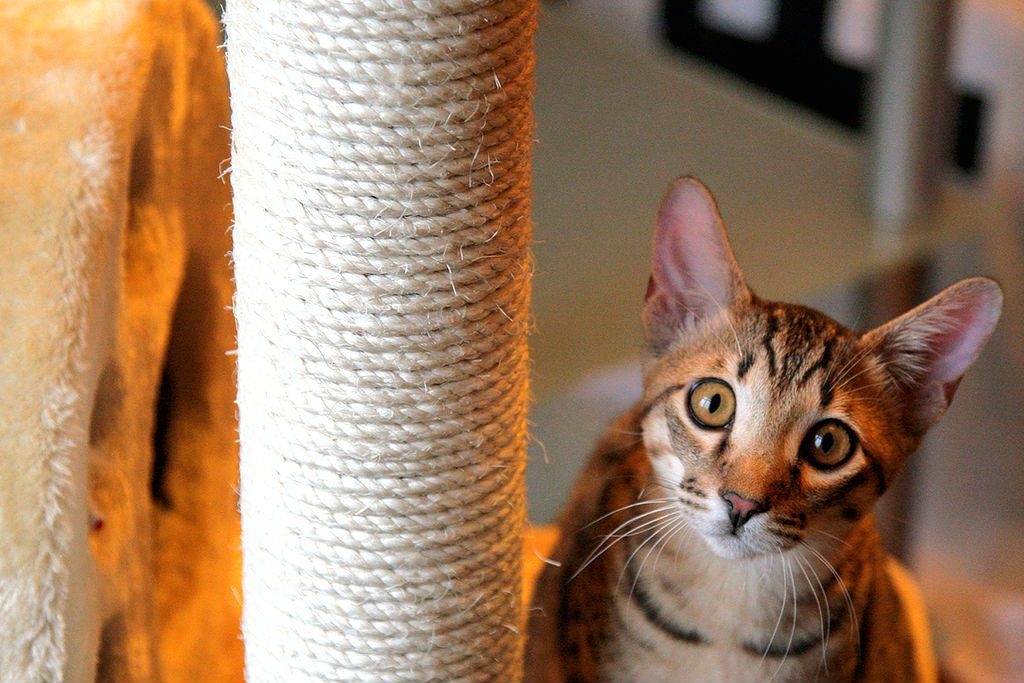
Keeping Savannahs can present some challenges. For example, unneutered males are very territorial, and their urine smells more strongly than other breeds. Another downside is that larger cats will require a larger litter box and scratching post, which may require custom-made or homemade.
The main advantage of the breed is their appearance: no guest will remain indifferent to the sight of a small “leopard” sleeping on the sofa in the living room.
Care and maintenance
Although this breed is considered exotic, it doesn't require extensive grooming. The primary requirement is the quality of the diet. It should be fresh and natural. Sausages and other processed foods should be avoided, as this can lead to poor coat quality and illness. The basis of the cat's diet should consist of lean meats and chicken. If natural food is not available, super-premium and holistic foods are acceptable.
Regularity of food intake is twice a day: morning and evening. Your pet should have constant access to clean water.
Grooming consists of weekly brushing. Bathing is permitted every 4-6 weeks or more frequently—in the wild, the Savannah cat's ancestors, the servals, were excellent swimmers.
Cat training involves training the animal to stop scratching furniture and wallpaper, throwing dishes and other items on the floor, jumping on the dining table, damaging plants, and so on. Showing displeasure by scolding is practically useless—the cat will only become more destructive. The most effective way to train a cat is through scent—you can place a few drops of orange essential oil (they dislike the smell of citrus) on a flower pot or on the floor where the cat is scratching wallpaper or furniture.
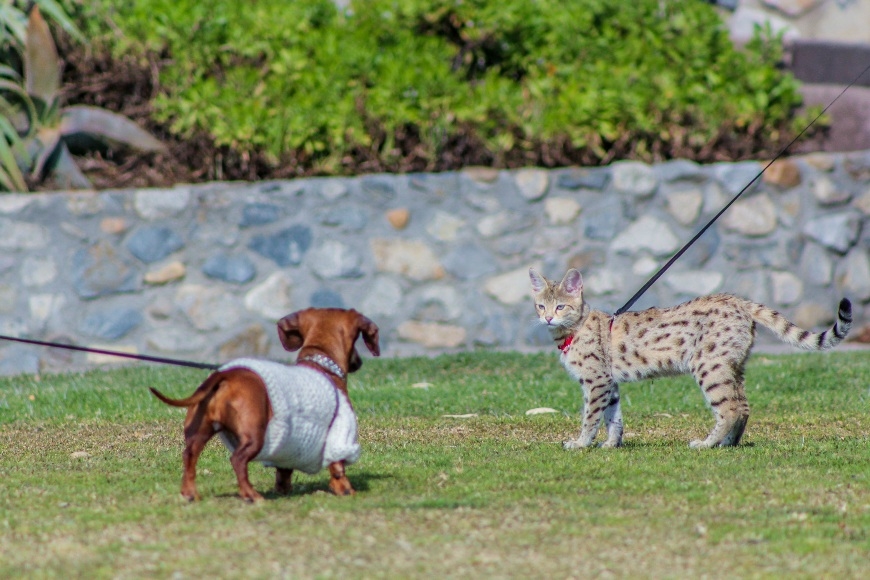
Training a Savannah dog can be quite challenging. Progress usually ends with the pet fetching a ball and walking beside you on a leash. When teaching these skills, use repeated words (commands). The tone should always be calm and consistent.
It's a good idea to build a special slide for playing with your pet: they love jumping on elevated surfaces and climbing them. Like other cat breeds, Savannahs enjoy chasing a ball or a "mouse" running out the door. They're completely unfazed by the fact that their prey is escaping with the help of a string pulled by their owner, who's hiding behind the door.
Diseases and treatment
Savannahs are free of hereditary diseases. However, the breed is susceptible to all the illnesses common to other cats.
Most often, pets develop:
- worms - removed with the help of drugs Prazitel, Drontal, Milbemax, Profender;
- lichen - therapy is carried out with ointments Thiabendazole, Miconazole and tablets Itraconazole, Terbinafine;
- fleas - to get rid of insects, it is effective to use a comprehensive treatment that includes a flea collar, drops and spray (for example, Blokhnet);
- Cystitis - treatment is carried out with antibiotics (Sinulox) with the prescription of additional medications (probiotics, antispasmodics and other medications at the discretion of the veterinarian).
To avoid many health problems for your cat, it is recommended to limit its contact with stray animals and get preventative vaccinations in advance.
Breeding
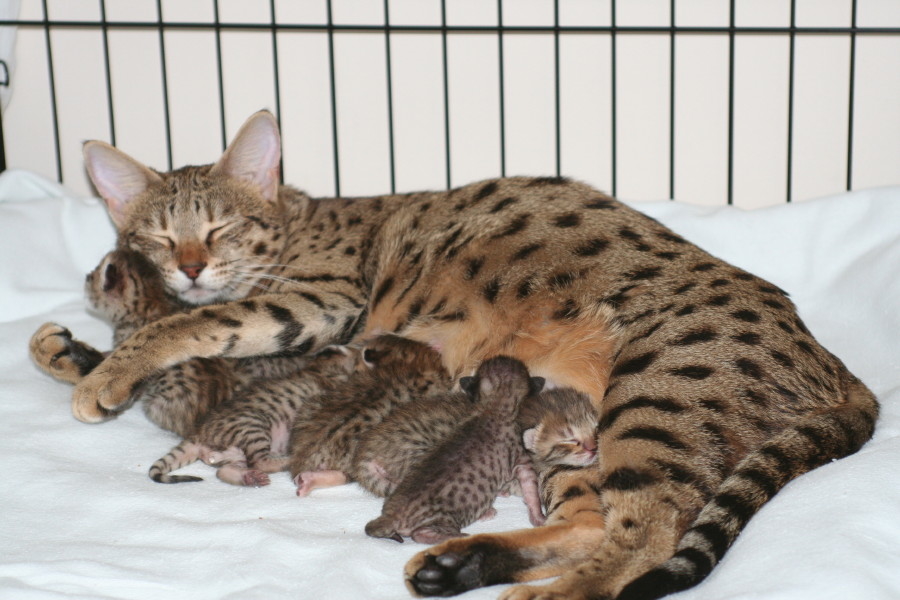
To breed the most beautiful and expensive cats, a female serval and a domestic cat (usually a Bengal or Siamese breed) are used. However, it's very difficult to get a wild predator and a domestic pet to mate. To increase the chances of mating, they are raised together for a long time to allow the animals to become accustomed to each other. The kitten survival rate is very low—no more than 15%.
Since male offspring born to the cat are sterile until the fourth generation, further breeding is carried out exclusively by mating a Savannah cat with a domestic cat of another breed. This reduces the cost of the animal.
Those considering getting a Savannah cat should keep in mind that acquiring a beautiful exotic animal comes with additional responsibilities due to the pet's unruly nature. It's not recommended for families with small children or those lacking the financial means to buy expensive, high-quality food.